India’s largest art institution with commercial galleries to acquire art and build collections, museum collaborations to view collections, and a range of programming and services that provide a comprehensive platform for the art collector, viewer or art lover.
The Right Ambience
for Viewing Art
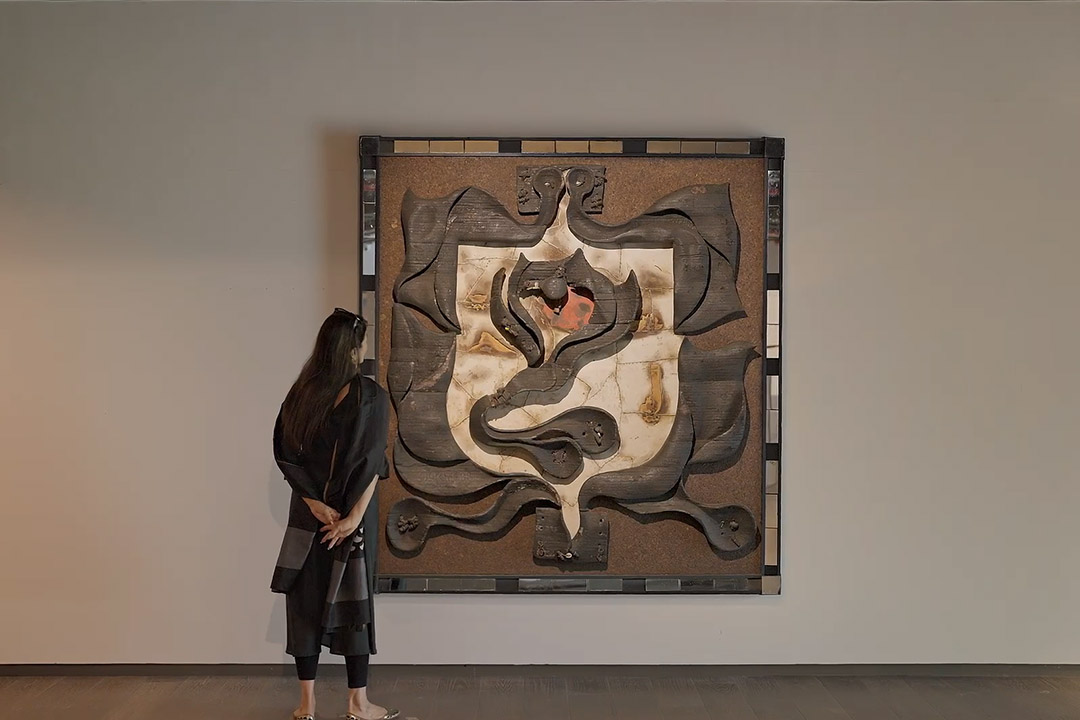
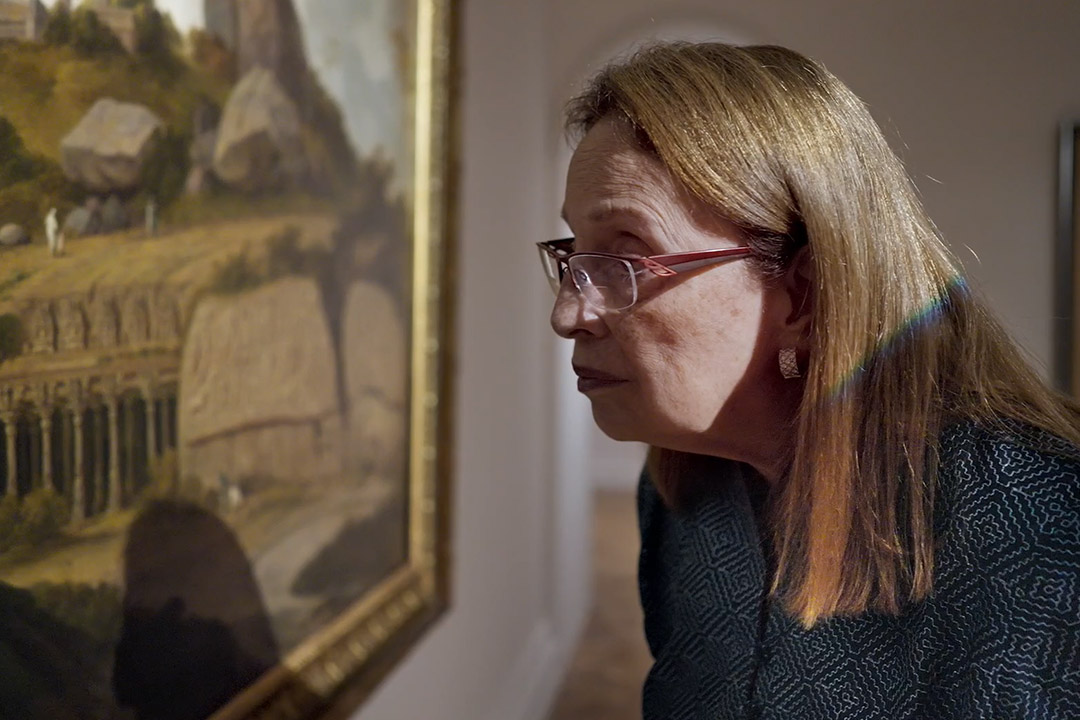
DAG has always ensured an immersive art-viewing experience with its galleries and museum-exhibitions located in thoughtfully designed spaces with an underlying sensitivity towards architectural accents.
The Right Ambience
for viewing Art
DAG has always ensured an immersive art-viewing experience with its galleries and museum-exhibitions located in thoughtfully designed spaces with an underlying sensitivity towards architectural accents.
A one-stop destination
for Indian art
India’s largest art institution with commercial galleries to acquire art and build collections, museum collaborations to view collections, and a range of programming and services that provide a comprehensive platform for the art collector, viewer or art lover.
A one-stop destination
for Indian art
DAG has always ensured an immersive art-viewing experience with its galleries and museum-exhibitions located in thoughtfully designed spaces with an underlying sensitivity towards architectural accents.
ON VIEW
Bombay Framed
People, Memory, Metropolis
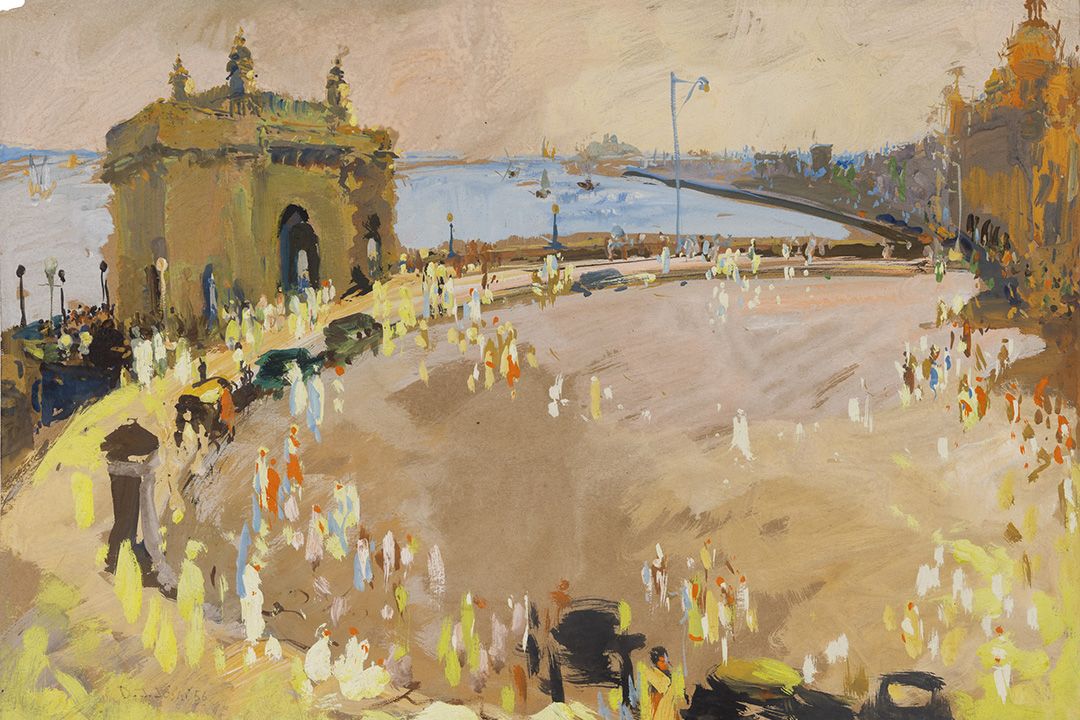
There is no single way to tell the story of Bombay (Mumbai)—because the city has never been one single narrative. From the traders of Crawford Market to the mill workers of Girgaum, from dockyards to film studios, Bombay has never been one singular narrative—a city of shifting realities. In Bombay Framed: People, Memory, Metropolis, historian and volume editor Gyan Prakash traces this dynamism through the lens of art, architecture, cinema, communities and urban transformation.
Ongoing
DAG Gallery 2, The Taj Mahal Palace, Apollo Bunder, Mumbai
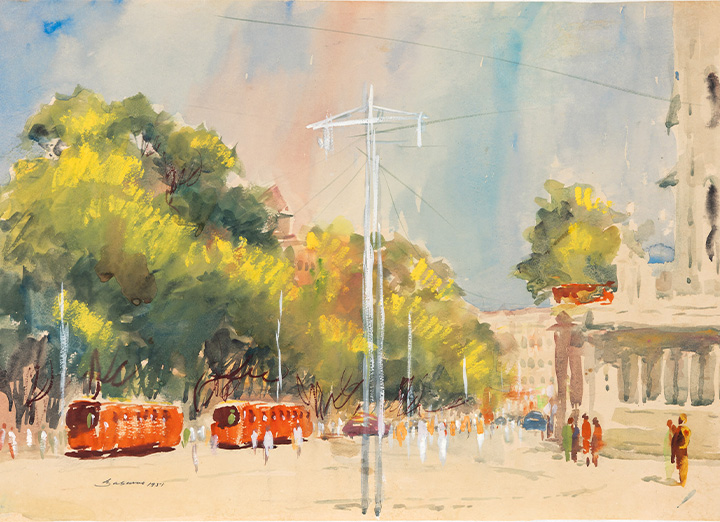
What began as a chance encounter soon crystallised into the desire to return to a story that has long deserved greater visibility—the remarkable history of the Delhi Silpi Chakra. A sustained, research-led engagement with artist collectives as critical structures in the making of modern Indian art extended to Drawing a Nation: The Delhi Silpi Chakra, an exhibition revisiting one of India’s longest-running and most influential artist collectives. Featuring works by B C Sanyal, Jagmohan Chopra, Dhanraj Bhagat, Paramjit Singh, Arpita Singh, Devayani Krishna, Kanwal Krishna, K S Kulkarni, Avinash Chandra, among others, it brings together practices that vary widely in form, material and theme.
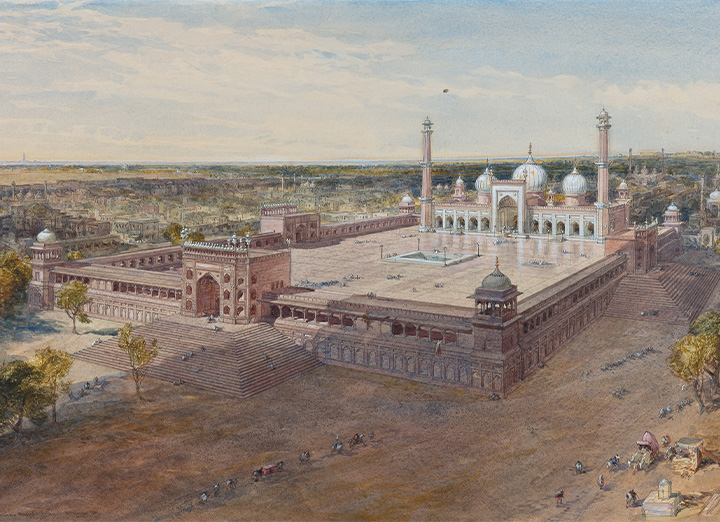
In partnership with Kolkata’s Alipore Museum, DAG opens Destination India: Foreign Artists in India, 1857-1947, a historical exhibition that uncovers a forgotten archive of foreign painters and printmakers in a fast-changing India, after showing successfully at its galleries in New Delhi and Mumbai.
NDTV honoured DAG with the Gallery of the Year award, as well as the Art Book of the Year award for Madhvi Parekh: Early Drawings at the first edition of NDTV Masterstroke Art Awards held in February 2026, reaffirming the value of DAG’s sustained curatorial inquiry, rigorous scholarship, and a long-term commitment to the arts.
Talk
The Delhi Silpi Chakra
Art historian Atreyee Gupta joins us on 20 March 2026 for a talk that traces the Delhi Silpi Chakra’s emergence from the upheavals of Partition, exploring how displaced artists forged a collective, civic-minded modernism in post-Partition New Delhi.
Please join us for a talk by architect and academician Mustansir Dalvi as he reflects on the city of Bombay tracing how memory and place shape our experience of the metropolis.
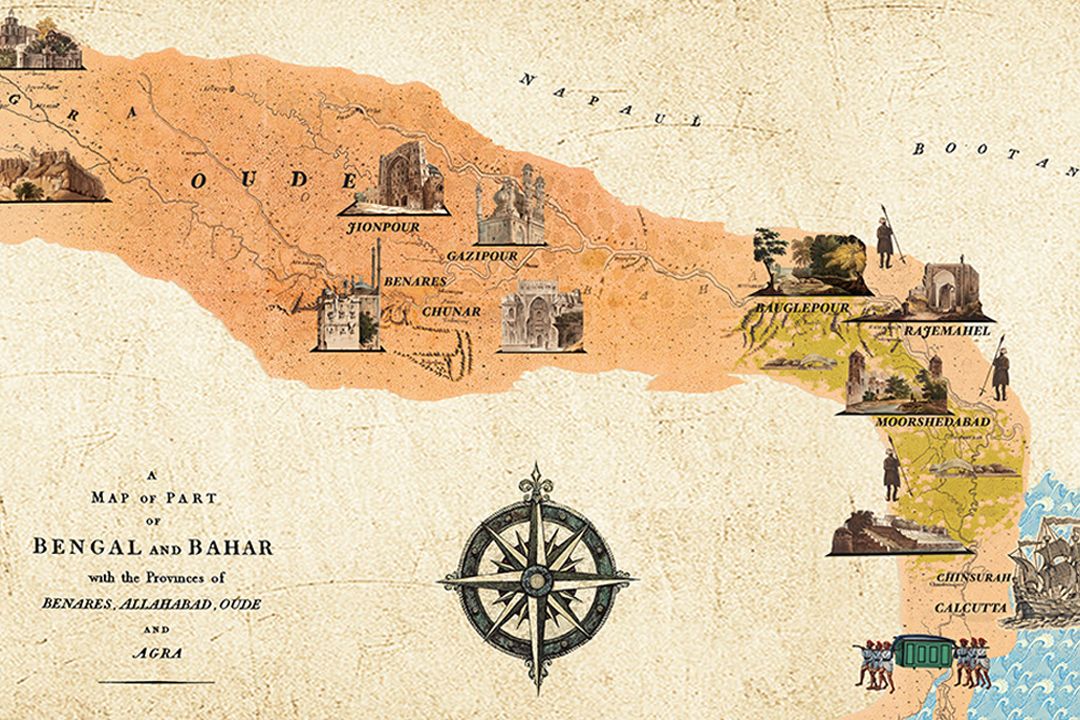
Please join us for the opening of The Indian Picturesque: Landscape Painting 1800–1850, a pioneering exhibition that brings together, for the first time, British and Indian landscape paintings from the early nineteenth century to examine their artistic interconnections and shared visual vocabulary.
Destination India: Foreign Artists in India 1857–1947
In collaboration with Kolkata's Alipore Museum, DAG invites you to a walkthrough with Giles Tillotson, SVP, DAG, as he examines the varied and complex representations of India through the works of British and other European artists.
The Journal highlights DAG’s expanding engagement with art history and the city through the second edition of The City as a Museum, Mumbai, featuring programmes with artists and thinkers such as Navjot Altaf, Ranjit Hoskote, Jerry Pinto and Nancy Adajania. We also take a look at the practices that shaped early Indian photographic studios and feature a conversation between B. C. Sanyal and P. N. Mago of the Delhi Silpi Chakra, on the occasion of DAG’s landmark exhibition on the group.
Announcing the second phase of DAG Museum's landmark collaboration with Teach for India, continuing from the pilot programme in Kolkata. Working for a year, the Education team will be working with the brilliant Teaching Fellows who will bring the primary school curriculum alive using DAG's art-integrated methodology and artworks from the DAG collection.
Collections Abroad
DAG AT THE PIERRE, NEW YORK
Complementing the elegant architecture of the reception and the hotel lobby at The Pierre, New York, a Taj hotel, in Manhattan are works from DAG’s collection of modern masters on display in the public areas—among them paintings by G. R. Santosh, Rabin Mondal, and Shanti Dave, reflecting the New York hotel’s Indian heritage.
DAG ACQUIRES THE 75-YEAR-OLD JAMINI ROY HOUSE IN KOLKATA TO OPEN INDIA’S FIRST PRIVATE SINGLE-ARTIST MUSEUM
In 1949, Jamini Roy moved from his modest Baghbazar home in north Calcutta to the genteel neighbourhood of Ballygunge Place, at the time an open area with bungalows in a neighbourhood occupied by professionals. Here, as his practice grew, so did his family, and the artist added rooms and floors to the home in which he lived till his passing away in 1972. Four years later, the Government of India declared him a National Treasure artist. In March 2023, the historic home of India’s most loved modernist was acquired by India’s most respected art company, DAG, for the express purpose of creating India’s first world-class private single-artist museum and cultural resource centre on the life, work and times of this pioneering artist.
India has a lacuna of professionally run private art museums and there are no professionally run single-artist museums in the country, a gap that DAG hopes to fill with the restoration of the 75-year-old historical house with the help of conservation architects and designers. The Jamini Roy House Museum is envisioned as a tribute to the artist, and the values of simplicity, creativity and universalism that he espoused.
Journal: Edition 11
In this issue of the Journal, we take stock of various artistic responses to the present. We take a look at how partition impacted the networks of popular art, especially highlighting the presence and absence of Islamic subjects in this domain, through a conversation with Tasveer Ghar’s Project director, Yousuf Saeed. We continue our ongoing conversation with the historian Swati Chattopadhyay on her reading practices for understanding the social uses of public space. We round-up the year with profile interviews of award-winning artists Jogen Chowdhury and Aban Raza, two artists committed to translating the existential and political uncertainties of our time onto their canvases.
We also take a closer look at Gopal Ghose’s life and work, as DAG opens a major show on the artist’s works over a lifetime. Also featuring our Term of the Month: the uses of ‘calendar art’ in the wider context of unifying a temporal order for a new nation post-independence.
Digital Museum Initiatives
DAG takes a significant step towards its vision of making art accessible for all, allocating over 180 artworks and archival artefacts from the collection to its Museums Programme. With the launch of the new website, these works are now on view online.
The works on view as a part of the digital museum are drawn primarily from DAG’s historic collection of Bengal art, ranging across the nineteenth and the twentieth centuries. It provides a unique resource for art lovers to explore the evolution of art in the region, at a time when Calcutta became a hub for global exchanges as the capital of the British Empire. Starting with experiments with academic art in the early days of the colony, the collection traverses the artistic developments of the Swadeshi period and the tumultuous years before and after Independence. In addition, there are a range of photographs and objects from DAG’s archives, presented as capsule collections that delve into specific micro-histories, and open up new areas of research.
Accompanied with illustrated stories, timelines and videos this growing online collection brings the museum experience into our homes and is envisioned as an enduring resource that can be savoured over time for learning, analysis and simply for the love of art!
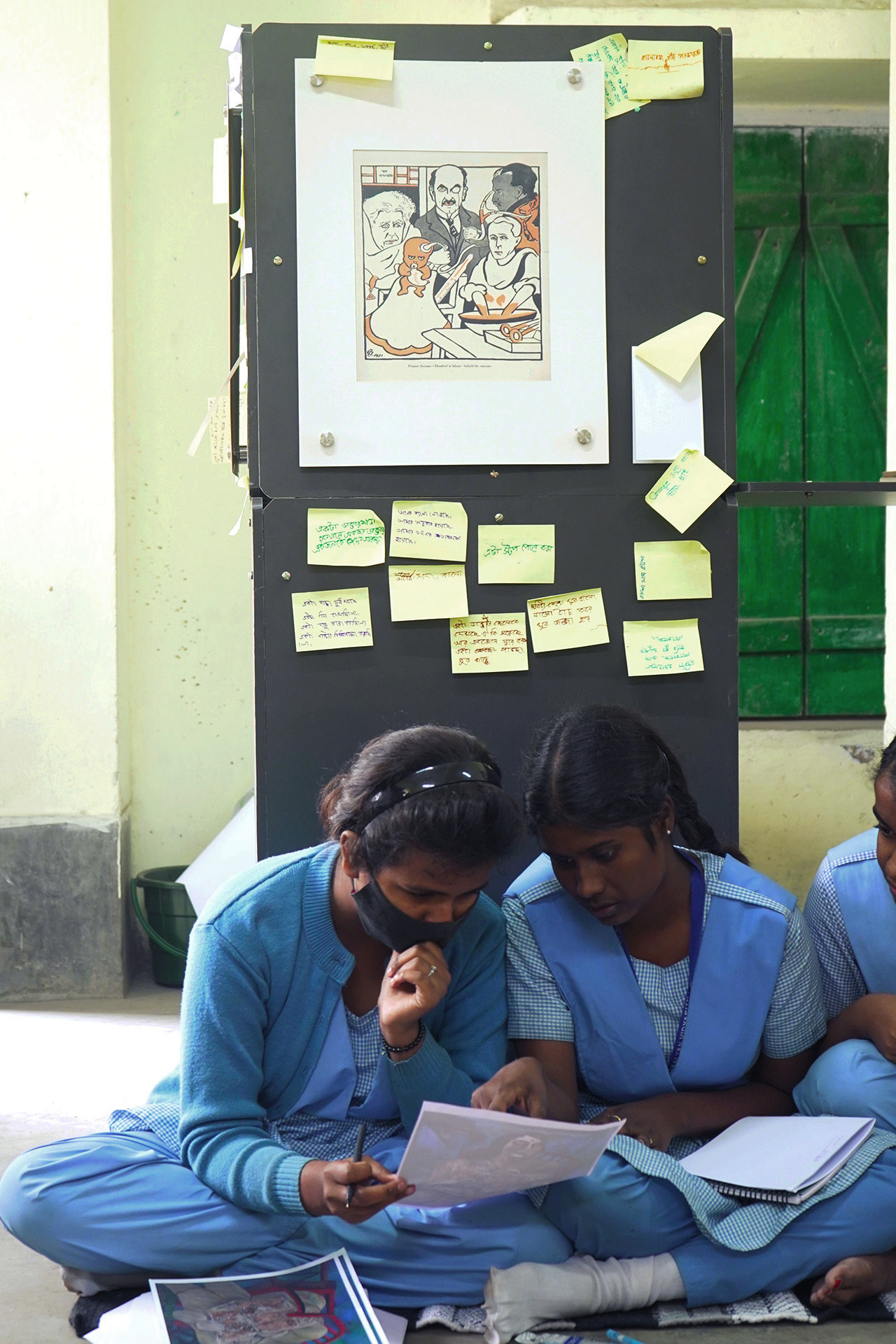
The Art Lab is a travelling, popup museum that takes art into schools, making DAG’s extensive collection directly accessible to young people. Over two weeks, students immerse themselves in the exhibition and take over as artists, researchers, and curators to create their own museum. The exhibition is modular by design, and by the end of the process it takes a completely different shape and form as students intervene with their ideas and creative expressions.
Art Lab also engages with the wider community, with students across different classes, parents, local officials, and partner schools who visit the exhibition on Open House days when the classroom is teeming with the energy and engagement of a busy day at the museum. As a part of Art Lab, DAG also offers a workshop for teachers where they explore simple tools for integrating art in their lessons, and build shared knowledge about art based pedagogies.
Started in Kolkata in April 2022, Art Lab has now travelled to six schools, adding a Bengali module for first generation learners so that the programme can be accessed widely, across socio-economic barriers, as the museum travels across the country.
Four latest issue of the Journal we focused on a thematic of travel and mountains. Both have provided ample opportunities and sites of experimentation for Indian artists to push their skills in representing views that are not easily seen by most. We travelled to the Nicholas Roerich Museum in New York too, to give you a glimpse of this peripatetic artist and writer's contribution to American life and art, as he made fragments of the Himalayan world and its diverse cultures available to Americans.
We also spoke to Carol Huh about an exhibition at the Smithsonian's National Museum of Asian Art that focuses on Indian contemporary photographers who study landscapes and feature Indian artists who sketched their way to the hills, including M. V. Dhurandhar and Benode Behari Mukherjee.
DAG ACQUIRES THE 75-YEAR-OLD JAMINI ROY HOUSE IN KOLKATA TO OPEN INDIA’S FIRST PRIVATE SINGLE-ARTIST MUSEUM
In 1949, Jamini Roy moved from his modest Baghbazar home in north Calcutta to the genteel neighbourhood of Ballygunge Place, at the time an open area with bungalows in a neighbourhood occupied by professionals. Here, as his practice grew, so did his family, and the artist added rooms and floors to the home in which he lived till his passing away in 1972. Four years later, the Government of India declared him a National Treasure artist. In March 2023, the historic home of India’s most loved modernist was acquired by India’s most respected art company, DAG, for the express purpose of creating India’s first world-class private single-artist museum and cultural resource centre on the life, work and times of this pioneering artist.
India has a lacuna of professionally run private art museums and there are no professionally run single-artist museums in the country, a gap that DAG hopes to fill with the restoration of the 75-year-old historical house with the help of conservation architects and designers. The Jamini Roy House Museum is envisioned as a tribute to the artist, and the values of simplicity, creativity and universalism that he espoused.
Journal: Edition 11
In this issue of the Journal, we take stock of various artistic responses to the present. We take a look at how partition impacted the networks of popular art, especially highlighting the presence and absence of Islamic subjects in this domain, through a conversation with Tasveer Ghar’s Project director, Yousuf Saeed. We continue our ongoing conversation with the historian Swati Chattopadhyay on her reading practices for understanding the social uses of public space. We round-up the year with profile interviews of award-winning artists Jogen Chowdhury and Aban Raza, two artists committed to translating the existential and political uncertainties of our time onto their canvases.
We also take a closer look at Gopal Ghose’s life and work, as DAG opens a major show on the artist’s works over a lifetime. Also featuring our Term of the Month: the uses of ‘calendar art’ in the wider context of unifying a temporal order for a new nation post-independence.
Digital Museum Initiatives
DAG takes a significant step towards its vision of making art accessible for all, allocating over 180 artworks and archival artefacts from the collection to its Museums Programme. With the launch of the new website, these works are now on view online.
The works on view as a part of the digital museum are drawn primarily from DAG’s historic collection of Bengal art, ranging across the nineteenth and the twentieth centuries. It provides a unique resource for art lovers to explore the evolution of art in the region, at a time when Calcutta became a hub for global exchanges as the capital of the British Empire. Starting with experiments with academic art in the early days of the colony, the collection traverses the artistic developments of the Swadeshi period and the tumultuous years before and after Independence. In addition, there are a range of photographs and objects from DAG’s archives, presented as capsule collections that delve into specific micro-histories, and open up new areas of research.
Accompanied with illustrated stories, timelines and videos this growing online collection brings the museum experience into our homes and is envisioned as an enduring resource that can be savoured over time for learning, analysis and simply for the love of art!
The Art Lab is a travelling, popup museum that takes art into schools, making DAG’s extensive collection directly accessible to young people. Over two weeks, students immerse themselves in the exhibition and take over as artists, researchers, and curators to create their own museum. The exhibition is modular by design, and by the end of the process it takes a completely different shape and form as students intervene with their ideas and creative expressions.
Art Lab also engages with the wider community, with students across different classes, parents, local officials, and partner schools who visit the exhibition on Open House days when the classroom is teeming with the energy and engagement of a busy day at the museum. As a part of Art Lab, DAG also offers a workshop for teachers where they explore simple tools for integrating art in their lessons, and build shared knowledge about art based pedagogies.
Started in Kolkata in April 2022, Art Lab has now travelled to six schools, adding a Bengali module for first generation learners so that the programme can be accessed widely, across socio-economic barriers, as the museum travels across the country.
Four latest issue of the Journal we focused on a thematic of travel and mountains. Both have provided ample opportunities and sites of experimentation for Indian artists to push their skills in representing views that are not easily seen by most. We travelled to the Nicholas Roerich Museum in New York too, to give you a glimpse of this peripatetic artist and writer's contribution to American life and art, as he made fragments of the Himalayan world and its diverse cultures available to Americans.
We also spoke to Carol Huh about an exhibition at the Smithsonian's National Museum of Asian Art that focuses on Indian contemporary photographers who study landscapes and feature Indian artists who sketched their way to the hills, including M. V. Dhurandhar and Benode Behari Mukherjee.
DAG ACQUIRES THE 75-YEAR-OLD JAMINI ROY HOUSE IN KOLKATA TO OPEN INDIA’S FIRST PRIVATE SINGLE-ARTIST MUSEUM
In 1949, Jamini Roy moved from his modest Baghbazar home in north Calcutta to the genteel neighbourhood of Ballygunge Place, at the time an open area with bungalows in a neighbourhood occupied by professionals. Here, as his practice grew, so did his family, and the artist added rooms and floors to the home in which he lived till his passing away in 1972. Four years later, the Government of India declared him a National Treasure artist. In March 2023, the historic home of India’s most loved modernist was acquired by India’s most respected art company, DAG, for the express purpose of creating India’s first world-class private single-artist museum and cultural resource centre on the life, work and times of this pioneering artist.
India has a lacuna of professionally run private art museums and there are no professionally run single-artist museums in the country, a gap that DAG hopes to fill with the restoration of the 75-year-old historical house with the help of conservation architects and designers. The Jamini Roy House Museum is envisioned as a tribute to the artist, and the values of simplicity, creativity and universalism that he espoused.
Journal: Edition 11
In this issue of the Journal, we take stock of various artistic responses to the present. We take a look at how partition impacted the networks of popular art, especially highlighting the presence and absence of Islamic subjects in this domain, through a conversation with Tasveer Ghar’s Project director, Yousuf Saeed. We continue our ongoing conversation with the historian Swati Chattopadhyay on her reading practices for understanding the social uses of public space. We round-up the year with profile interviews of award-winning artists Jogen Chowdhury and Aban Raza, two artists committed to translating the existential and political uncertainties of our time onto their canvases.
We also take a closer look at Gopal Ghose’s life and work, as DAG opens a major show on the artist’s works over a lifetime. Also featuring our Term of the Month: the uses of ‘calendar art’ in the wider context of unifying a temporal order for a new nation post-independence.
Digital Museum Initiatives
DAG takes a significant step towards its vision of making art accessible for all, allocating over 180 artworks and archival artefacts from the collection to its Museums Programme. With the launch of the new website, these works are now on view online.
The works on view as a part of the digital museum are drawn primarily from DAG’s historic collection of Bengal art, ranging across the nineteenth and the twentieth centuries. It provides a unique resource for art lovers to explore the evolution of art in the region, at a time when Calcutta became a hub for global exchanges as the capital of the British Empire. Starting with experiments with academic art in the early days of the colony, the collection traverses the artistic developments of the Swadeshi period and the tumultuous years before and after Independence. In addition, there are a range of photographs and objects from DAG’s archives, presented as capsule collections that delve into specific micro-histories, and open up new areas of research.
Accompanied with illustrated stories, timelines and videos this growing online collection brings the museum experience into our homes and is envisioned as an enduring resource that can be savoured over time for learning, analysis and simply for the love of art!
The Art Lab is a travelling, popup museum that takes art into schools, making DAG’s extensive collection directly accessible to young people. Over two weeks, students immerse themselves in the exhibition and take over as artists, researchers, and curators to create their own museum. The exhibition is modular by design, and by the end of the process it takes a completely different shape and form as students intervene with their ideas and creative expressions.
Art Lab also engages with the wider community, with students across different classes, parents, local officials, and partner schools who visit the exhibition on Open House days when the classroom is teeming with the energy and engagement of a busy day at the museum. As a part of Art Lab, DAG also offers a workshop for teachers where they explore simple tools for integrating art in their lessons, and build shared knowledge about art based pedagogies.
Started in Kolkata in April 2022, Art Lab has now travelled to six schools, adding a Bengali module for first generation learners so that the programme can be accessed widely, across socio-economic barriers, as the museum travels across the country.
Four latest issue of the Journal we focused on a thematic of travel and mountains. Both have provided ample opportunities and sites of experimentation for Indian artists to push their skills in representing views that are not easily seen by most. We travelled to the Nicholas Roerich Museum in New York too, to give you a glimpse of this peripatetic artist and writer's contribution to American life and art, as he made fragments of the Himalayan world and its diverse cultures available to Americans.
We also spoke to Carol Huh about an exhibition at the Smithsonian's National Museum of Asian Art that focuses on Indian contemporary photographers who study landscapes and feature Indian artists who sketched their way to the hills, including M. V. Dhurandhar and Benode Behari Mukherjee.
DAG ACQUIRES THE 75-YEAR-OLD JAMINI ROY HOUSE IN KOLKATA TO OPEN INDIA’S FIRST PRIVATE SINGLE-ARTIST MUSEUM
In 1949, Jamini Roy moved from his modest Baghbazar home in north Calcutta to the genteel neighbourhood of Ballygunge Place, at the time an open area with bungalows in a neighbourhood occupied by professionals. Here, as his practice grew, so did his family, and the artist added rooms and floors to the home in which he lived till his passing away in 1972. Four years later, the Government of India declared him a National Treasure artist. In March 2023, the historic home of India’s most loved modernist was acquired by India’s most respected art company, DAG, for the express purpose of creating India’s first world-class private single-artist museum and cultural resource centre on the life, work and times of this pioneering artist.
India has a lacuna of professionally run private art museums and there are no professionally run single-artist museums in the country, a gap that DAG hopes to fill with the restoration of the 75-year-old historical house with the help of conservation architects and designers. The Jamini Roy House Museum is envisioned as a tribute to the artist, and the values of simplicity, creativity and universalism that he espoused.
Journal: Edition 11
In this issue of the Journal, we take stock of various artistic responses to the present. We take a look at how partition impacted the networks of popular art, especially highlighting the presence and absence of Islamic subjects in this domain, through a conversation with Tasveer Ghar’s Project director, Yousuf Saeed. We continue our ongoing conversation with the historian Swati Chattopadhyay on her reading practices for understanding the social uses of public space. We round-up the year with profile interviews of award-winning artists Jogen Chowdhury and Aban Raza, two artists committed to translating the existential and political uncertainties of our time onto their canvases.
We also take a closer look at Gopal Ghose’s life and work, as DAG opens a major show on the artist’s works over a lifetime. Also featuring our Term of the Month: the uses of ‘calendar art’ in the wider context of unifying a temporal order for a new nation post-independence.
Digital Museum Initiatives
DAG takes a significant step towards its vision of making art accessible for all, allocating over 180 artworks and archival artefacts from the collection to its Museums Programme. With the launch of the new website, these works are now on view online.
The works on view as a part of the digital museum are drawn primarily from DAG’s historic collection of Bengal art, ranging across the nineteenth and the twentieth centuries. It provides a unique resource for art lovers to explore the evolution of art in the region, at a time when Calcutta became a hub for global exchanges as the capital of the British Empire. Starting with experiments with academic art in the early days of the colony, the collection traverses the artistic developments of the Swadeshi period and the tumultuous years before and after Independence. In addition, there are a range of photographs and objects from DAG’s archives, presented as capsule collections that delve into specific micro-histories, and open up new areas of research.
Accompanied with illustrated stories, timelines and videos this growing online collection brings the museum experience into our homes and is envisioned as an enduring resource that can be savoured over time for learning, analysis and simply for the love of art!
The Art Lab is a travelling, popup museum that takes art into schools, making DAG’s extensive collection directly accessible to young people. Over two weeks, students immerse themselves in the exhibition and take over as artists, researchers, and curators to create their own museum. The exhibition is modular by design, and by the end of the process it takes a completely different shape and form as students intervene with their ideas and creative expressions.
Art Lab also engages with the wider community, with students across different classes, parents, local officials, and partner schools who visit the exhibition on Open House days when the classroom is teeming with the energy and engagement of a busy day at the museum. As a part of Art Lab, DAG also offers a workshop for teachers where they explore simple tools for integrating art in their lessons, and build shared knowledge about art based pedagogies.
Started in Kolkata in April 2022, Art Lab has now travelled to six schools, adding a Bengali module for first generation learners so that the programme can be accessed widely, across socio-economic barriers, as the museum travels across the country.
Four latest issue of the Journal we focused on a thematic of travel and mountains. Both have provided ample opportunities and sites of experimentation for Indian artists to push their skills in representing views that are not easily seen by most. We travelled to the Nicholas Roerich Museum in New York too, to give you a glimpse of this peripatetic artist and writer's contribution to American life and art, as he made fragments of the Himalayan world and its diverse cultures available to Americans.
We also spoke to Carol Huh about an exhibition at the Smithsonian's National Museum of Asian Art that focuses on Indian contemporary photographers who study landscapes and feature Indian artists who sketched their way to the hills, including M. V. Dhurandhar and Benode Behari Mukherjee.
DAG ACQUIRES THE 75-YEAR-OLD JAMINI ROY HOUSE IN KOLKATA TO OPEN INDIA’S FIRST PRIVATE SINGLE-ARTIST MUSEUM
In 1949, Jamini Roy moved from his modest Baghbazar home in north Calcutta to the genteel neighbourhood of Ballygunge Place, at the time an open area with bungalows in a neighbourhood occupied by professionals. Here, as his practice grew, so did his family, and the artist added rooms and floors to the home in which he lived till his passing away in 1972. Four years later, the Government of India declared him a National Treasure artist. In March 2023, the historic home of India’s most loved modernist was acquired by India’s most respected art company, DAG, for the express purpose of creating India’s first world-class private single-artist museum and cultural resource centre on the life, work and times of this pioneering artist.
India has a lacuna of professionally run private art museums and there are no professionally run single-artist museums in the country, a gap that DAG hopes to fill with the restoration of the 75-year-old historical house with the help of conservation architects and designers. The Jamini Roy House Museum is envisioned as a tribute to the artist, and the values of simplicity, creativity and universalism that he espoused.
Journal: Edition 11
In this issue of the Journal, we take stock of various artistic responses to the present. We take a look at how partition impacted the networks of popular art, especially highlighting the presence and absence of Islamic subjects in this domain, through a conversation with Tasveer Ghar’s Project director, Yousuf Saeed. We continue our ongoing conversation with the historian Swati Chattopadhyay on her reading practices for understanding the social uses of public space. We round-up the year with profile interviews of award-winning artists Jogen Chowdhury and Aban Raza, two artists committed to translating the existential and political uncertainties of our time onto their canvases.
We also take a closer look at Gopal Ghose’s life and work, as DAG opens a major show on the artist’s works over a lifetime. Also featuring our Term of the Month: the uses of ‘calendar art’ in the wider context of unifying a temporal order for a new nation post-independence.
Digital Museum Initiatives
DAG takes a significant step towards its vision of making art accessible for all, allocating over 180 artworks and archival artefacts from the collection to its Museums Programme. With the launch of the new website, these works are now on view online.
The works on view as a part of the digital museum are drawn primarily from DAG’s historic collection of Bengal art, ranging across the nineteenth and the twentieth centuries. It provides a unique resource for art lovers to explore the evolution of art in the region, at a time when Calcutta became a hub for global exchanges as the capital of the British Empire. Starting with experiments with academic art in the early days of the colony, the collection traverses the artistic developments of the Swadeshi period and the tumultuous years before and after Independence. In addition, there are a range of photographs and objects from DAG’s archives, presented as capsule collections that delve into specific micro-histories, and open up new areas of research.
Accompanied with illustrated stories, timelines and videos this growing online collection brings the museum experience into our homes and is envisioned as an enduring resource that can be savoured over time for learning, analysis and simply for the love of art!
The Art Lab is a travelling, popup museum that takes art into schools, making DAG’s extensive collection directly accessible to young people. Over two weeks, students immerse themselves in the exhibition and take over as artists, researchers, and curators to create their own museum. The exhibition is modular by design, and by the end of the process it takes a completely different shape and form as students intervene with their ideas and creative expressions.
Art Lab also engages with the wider community, with students across different classes, parents, local officials, and partner schools who visit the exhibition on Open House days when the classroom is teeming with the energy and engagement of a busy day at the museum. As a part of Art Lab, DAG also offers a workshop for teachers where they explore simple tools for integrating art in their lessons, and build shared knowledge about art based pedagogies.
Started in Kolkata in April 2022, Art Lab has now travelled to six schools, adding a Bengali module for first generation learners so that the programme can be accessed widely, across socio-economic barriers, as the museum travels across the country.
Four latest issue of the Journal we focused on a thematic of travel and mountains. Both have provided ample opportunities and sites of experimentation for Indian artists to push their skills in representing views that are not easily seen by most. We travelled to the Nicholas Roerich Museum in New York too, to give you a glimpse of this peripatetic artist and writer's contribution to American life and art, as he made fragments of the Himalayan world and its diverse cultures available to Americans.
We also spoke to Carol Huh about an exhibition at the Smithsonian's National Museum of Asian Art that focuses on Indian contemporary photographers who study landscapes and feature Indian artists who sketched their way to the hills, including M. V. Dhurandhar and Benode Behari Mukherjee.
DAG ACQUIRES THE 75-YEAR-OLD JAMINI ROY HOUSE IN KOLKATA TO OPEN INDIA’S FIRST PRIVATE SINGLE-ARTIST MUSEUM
In 1949, Jamini Roy moved from his modest Baghbazar home in north Calcutta to the genteel neighbourhood of Ballygunge Place, at the time an open area with bungalows in a neighbourhood occupied by professionals. Here, as his practice grew, so did his family, and the artist added rooms and floors to the home in which he lived till his passing away in 1972. Four years later, the Government of India declared him a National Treasure artist. In March 2023, the historic home of India’s most loved modernist was acquired by India’s most respected art company, DAG, for the express purpose of creating India’s first world-class private single-artist museum and cultural resource centre on the life, work and times of this pioneering artist.
India has a lacuna of professionally run private art museums and there are no professionally run single-artist museums in the country, a gap that DAG hopes to fill with the restoration of the 75-year-old historical house with the help of conservation architects and designers. The Jamini Roy House Museum is envisioned as a tribute to the artist, and the values of simplicity, creativity and universalism that he espoused.
Journal: Edition 11
In this issue of the Journal, we take stock of various artistic responses to the present. We take a look at how partition impacted the networks of popular art, especially highlighting the presence and absence of Islamic subjects in this domain, through a conversation with Tasveer Ghar’s Project director, Yousuf Saeed. We continue our ongoing conversation with the historian Swati Chattopadhyay on her reading practices for understanding the social uses of public space. We round-up the year with profile interviews of award-winning artists Jogen Chowdhury and Aban Raza, two artists committed to translating the existential and political uncertainties of our time onto their canvases.
We also take a closer look at Gopal Ghose’s life and work, as DAG opens a major show on the artist’s works over a lifetime. Also featuring our Term of the Month: the uses of ‘calendar art’ in the wider context of unifying a temporal order for a new nation post-independence.
Digital Museum Initiatives
DAG takes a significant step towards its vision of making art accessible for all, allocating over 180 artworks and archival artefacts from the collection to its Museums Programme. With the launch of the new website, these works are now on view online.
The works on view as a part of the digital museum are drawn primarily from DAG’s historic collection of Bengal art, ranging across the nineteenth and the twentieth centuries. It provides a unique resource for art lovers to explore the evolution of art in the region, at a time when Calcutta became a hub for global exchanges as the capital of the British Empire. Starting with experiments with academic art in the early days of the colony, the collection traverses the artistic developments of the Swadeshi period and the tumultuous years before and after Independence. In addition, there are a range of photographs and objects from DAG’s archives, presented as capsule collections that delve into specific micro-histories, and open up new areas of research.
Accompanied with illustrated stories, timelines and videos this growing online collection brings the museum experience into our homes and is envisioned as an enduring resource that can be savoured over time for learning, analysis and simply for the love of art!
The Art Lab is a travelling, popup museum that takes art into schools, making DAG’s extensive collection directly accessible to young people. Over two weeks, students immerse themselves in the exhibition and take over as artists, researchers, and curators to create their own museum. The exhibition is modular by design, and by the end of the process it takes a completely different shape and form as students intervene with their ideas and creative expressions.
Art Lab also engages with the wider community, with students across different classes, parents, local officials, and partner schools who visit the exhibition on Open House days when the classroom is teeming with the energy and engagement of a busy day at the museum. As a part of Art Lab, DAG also offers a workshop for teachers where they explore simple tools for integrating art in their lessons, and build shared knowledge about art based pedagogies.
Started in Kolkata in April 2022, Art Lab has now travelled to six schools, adding a Bengali module for first generation learners so that the programme can be accessed widely, across socio-economic barriers, as the museum travels across the country.
Four latest issue of the Journal we focused on a thematic of travel and mountains. Both have provided ample opportunities and sites of experimentation for Indian artists to push their skills in representing views that are not easily seen by most. We travelled to the Nicholas Roerich Museum in New York too, to give you a glimpse of this peripatetic artist and writer's contribution to American life and art, as he made fragments of the Himalayan world and its diverse cultures available to Americans.
We also spoke to Carol Huh about an exhibition at the Smithsonian's National Museum of Asian Art that focuses on Indian contemporary photographers who study landscapes and feature Indian artists who sketched their way to the hills, including M. V. Dhurandhar and Benode Behari Mukherjee.
DAG ACQUIRES THE 75-YEAR-OLD JAMINI ROY HOUSE IN KOLKATA TO OPEN INDIA’S FIRST PRIVATE SINGLE-ARTIST MUSEUM
In 1949, Jamini Roy moved from his modest Baghbazar home in north Calcutta to the genteel neighbourhood of Ballygunge Place, at the time an open area with bungalows in a neighbourhood occupied by professionals. Here, as his practice grew, so did his family, and the artist added rooms and floors to the home in which he lived till his passing away in 1972. Four years later, the Government of India declared him a National Treasure artist. In March 2023, the historic home of India’s most loved modernist was acquired by India’s most respected art company, DAG, for the express purpose of creating India’s first world-class private single-artist museum and cultural resource centre on the life, work and times of this pioneering artist.
India has a lacuna of professionally run private art museums and there are no professionally run single-artist museums in the country, a gap that DAG hopes to fill with the restoration of the 75-year-old historical house with the help of conservation architects and designers. The Jamini Roy House Museum is envisioned as a tribute to the artist, and the values of simplicity, creativity and universalism that he espoused.
Journal: Edition 11
In this issue of the Journal, we take stock of various artistic responses to the present. We take a look at how partition impacted the networks of popular art, especially highlighting the presence and absence of Islamic subjects in this domain, through a conversation with Tasveer Ghar’s Project director, Yousuf Saeed. We continue our ongoing conversation with the historian Swati Chattopadhyay on her reading practices for understanding the social uses of public space. We round-up the year with profile interviews of award-winning artists Jogen Chowdhury and Aban Raza, two artists committed to translating the existential and political uncertainties of our time onto their canvases.
We also take a closer look at Gopal Ghose’s life and work, as DAG opens a major show on the artist’s works over a lifetime. Also featuring our Term of the Month: the uses of ‘calendar art’ in the wider context of unifying a temporal order for a new nation post-independence.
Digital Museum Initiatives
DAG takes a significant step towards its vision of making art accessible for all, allocating over 180 artworks and archival artefacts from the collection to its Museums Programme. With the launch of the new website, these works are now on view online.
The works on view as a part of the digital museum are drawn primarily from DAG’s historic collection of Bengal art, ranging across the nineteenth and the twentieth centuries. It provides a unique resource for art lovers to explore the evolution of art in the region, at a time when Calcutta became a hub for global exchanges as the capital of the British Empire. Starting with experiments with academic art in the early days of the colony, the collection traverses the artistic developments of the Swadeshi period and the tumultuous years before and after Independence. In addition, there are a range of photographs and objects from DAG’s archives, presented as capsule collections that delve into specific micro-histories, and open up new areas of research.
Accompanied with illustrated stories, timelines and videos this growing online collection brings the museum experience into our homes and is envisioned as an enduring resource that can be savoured over time for learning, analysis and simply for the love of art!
The Art Lab is a travelling, popup museum that takes art into schools, making DAG’s extensive collection directly accessible to young people. Over two weeks, students immerse themselves in the exhibition and take over as artists, researchers, and curators to create their own museum. The exhibition is modular by design, and by the end of the process it takes a completely different shape and form as students intervene with their ideas and creative expressions.
Art Lab also engages with the wider community, with students across different classes, parents, local officials, and partner schools who visit the exhibition on Open House days when the classroom is teeming with the energy and engagement of a busy day at the museum. As a part of Art Lab, DAG also offers a workshop for teachers where they explore simple tools for integrating art in their lessons, and build shared knowledge about art based pedagogies.
Started in Kolkata in April 2022, Art Lab has now travelled to six schools, adding a Bengali module for first generation learners so that the programme can be accessed widely, across socio-economic barriers, as the museum travels across the country.
Four latest issue of the Journal we focused on a thematic of travel and mountains. Both have provided ample opportunities and sites of experimentation for Indian artists to push their skills in representing views that are not easily seen by most. We travelled to the Nicholas Roerich Museum in New York too, to give you a glimpse of this peripatetic artist and writer's contribution to American life and art, as he made fragments of the Himalayan world and its diverse cultures available to Americans.
We also spoke to Carol Huh about an exhibition at the Smithsonian's National Museum of Asian Art that focuses on Indian contemporary photographers who study landscapes and feature Indian artists who sketched their way to the hills, including M. V. Dhurandhar and Benode Behari Mukherjee.
DAG ACQUIRES THE 75-YEAR-OLD JAMINI ROY HOUSE IN KOLKATA TO OPEN INDIA’S FIRST PRIVATE SINGLE-ARTIST MUSEUM
In 1949, Jamini Roy moved from his modest Baghbazar home in north Calcutta to the genteel neighbourhood of Ballygunge Place, at the time an open area with bungalows in a neighbourhood occupied by professionals. Here, as his practice grew, so did his family, and the artist added rooms and floors to the home in which he lived till his passing away in 1972. Four years later, the Government of India declared him a National Treasure artist. In March 2023, the historic home of India’s most loved modernist was acquired by India’s most respected art company, DAG, for the express purpose of creating India’s first world-class private single-artist museum and cultural resource centre on the life, work and times of this pioneering artist.
India has a lacuna of professionally run private art museums and there are no professionally run single-artist museums in the country, a gap that DAG hopes to fill with the restoration of the 75-year-old historical house with the help of conservation architects and designers. The Jamini Roy House Museum is envisioned as a tribute to the artist, and the values of simplicity, creativity and universalism that he espoused.
Journal: Edition 11
In this issue of the Journal, we take stock of various artistic responses to the present. We take a look at how partition impacted the networks of popular art, especially highlighting the presence and absence of Islamic subjects in this domain, through a conversation with Tasveer Ghar’s Project director, Yousuf Saeed. We continue our ongoing conversation with the historian Swati Chattopadhyay on her reading practices for understanding the social uses of public space. We round-up the year with profile interviews of award-winning artists Jogen Chowdhury and Aban Raza, two artists committed to translating the existential and political uncertainties of our time onto their canvases.
We also take a closer look at Gopal Ghose’s life and work, as DAG opens a major show on the artist’s works over a lifetime. Also featuring our Term of the Month: the uses of ‘calendar art’ in the wider context of unifying a temporal order for a new nation post-independence.
Digital Museum Initiatives
DAG takes a significant step towards its vision of making art accessible for all, allocating over 180 artworks and archival artefacts from the collection to its Museums Programme. With the launch of the new website, these works are now on view online.
The works on view as a part of the digital museum are drawn primarily from DAG’s historic collection of Bengal art, ranging across the nineteenth and the twentieth centuries. It provides a unique resource for art lovers to explore the evolution of art in the region, at a time when Calcutta became a hub for global exchanges as the capital of the British Empire. Starting with experiments with academic art in the early days of the colony, the collection traverses the artistic developments of the Swadeshi period and the tumultuous years before and after Independence. In addition, there are a range of photographs and objects from DAG’s archives, presented as capsule collections that delve into specific micro-histories, and open up new areas of research.
Accompanied with illustrated stories, timelines and videos this growing online collection brings the museum experience into our homes and is envisioned as an enduring resource that can be savoured over time for learning, analysis and simply for the love of art!
The Art Lab is a travelling, popup museum that takes art into schools, making DAG’s extensive collection directly accessible to young people. Over two weeks, students immerse themselves in the exhibition and take over as artists, researchers, and curators to create their own museum. The exhibition is modular by design, and by the end of the process it takes a completely different shape and form as students intervene with their ideas and creative expressions.
Art Lab also engages with the wider community, with students across different classes, parents, local officials, and partner schools who visit the exhibition on Open House days when the classroom is teeming with the energy and engagement of a busy day at the museum. As a part of Art Lab, DAG also offers a workshop for teachers where they explore simple tools for integrating art in their lessons, and build shared knowledge about art based pedagogies.
Started in Kolkata in April 2022, Art Lab has now travelled to six schools, adding a Bengali module for first generation learners so that the programme can be accessed widely, across socio-economic barriers, as the museum travels across the country.
Four latest issue of the Journal we focused on a thematic of travel and mountains. Both have provided ample opportunities and sites of experimentation for Indian artists to push their skills in representing views that are not easily seen by most. We travelled to the Nicholas Roerich Museum in New York too, to give you a glimpse of this peripatetic artist and writer's contribution to American life and art, as he made fragments of the Himalayan world and its diverse cultures available to Americans.
We also spoke to Carol Huh about an exhibition at the Smithsonian's National Museum of Asian Art that focuses on Indian contemporary photographers who study landscapes and feature Indian artists who sketched their way to the hills, including M. V. Dhurandhar and Benode Behari Mukherjee.
DAG ACQUIRES THE 75-YEAR-OLD JAMINI ROY HOUSE IN KOLKATA TO OPEN INDIA’S FIRST PRIVATE SINGLE-ARTIST MUSEUM
In 1949, Jamini Roy moved from his modest Baghbazar home in north Calcutta to the genteel neighbourhood of Ballygunge Place, at the time an open area with bungalows in a neighbourhood occupied by professionals. Here, as his practice grew, so did his family, and the artist added rooms and floors to the home in which he lived till his passing away in 1972. Four years later, the Government of India declared him a National Treasure artist. In March 2023, the historic home of India’s most loved modernist was acquired by India’s most respected art company, DAG, for the express purpose of creating India’s first world-class private single-artist museum and cultural resource centre on the life, work and times of this pioneering artist.
India has a lacuna of professionally run private art museums and there are no professionally run single-artist museums in the country, a gap that DAG hopes to fill with the restoration of the 75-year-old historical house with the help of conservation architects and designers. The Jamini Roy House Museum is envisioned as a tribute to the artist, and the values of simplicity, creativity and universalism that he espoused.
Journal: Edition 11
In this issue of the Journal, we take stock of various artistic responses to the present. We take a look at how partition impacted the networks of popular art, especially highlighting the presence and absence of Islamic subjects in this domain, through a conversation with Tasveer Ghar’s Project director, Yousuf Saeed. We continue our ongoing conversation with the historian Swati Chattopadhyay on her reading practices for understanding the social uses of public space. We round-up the year with profile interviews of award-winning artists Jogen Chowdhury and Aban Raza, two artists committed to translating the existential and political uncertainties of our time onto their canvases.
We also take a closer look at Gopal Ghose’s life and work, as DAG opens a major show on the artist’s works over a lifetime. Also featuring our Term of the Month: the uses of ‘calendar art’ in the wider context of unifying a temporal order for a new nation post-independence.
Digital Museum Initiatives
DAG takes a significant step towards its vision of making art accessible for all, allocating over 180 artworks and archival artefacts from the collection to its Museums Programme. With the launch of the new website, these works are now on view online.
The works on view as a part of the digital museum are drawn primarily from DAG’s historic collection of Bengal art, ranging across the nineteenth and the twentieth centuries. It provides a unique resource for art lovers to explore the evolution of art in the region, at a time when Calcutta became a hub for global exchanges as the capital of the British Empire. Starting with experiments with academic art in the early days of the colony, the collection traverses the artistic developments of the Swadeshi period and the tumultuous years before and after Independence. In addition, there are a range of photographs and objects from DAG’s archives, presented as capsule collections that delve into specific micro-histories, and open up new areas of research.
Accompanied with illustrated stories, timelines and videos this growing online collection brings the museum experience into our homes and is envisioned as an enduring resource that can be savoured over time for learning, analysis and simply for the love of art!
The Art Lab is a travelling, popup museum that takes art into schools, making DAG’s extensive collection directly accessible to young people. Over two weeks, students immerse themselves in the exhibition and take over as artists, researchers, and curators to create their own museum. The exhibition is modular by design, and by the end of the process it takes a completely different shape and form as students intervene with their ideas and creative expressions.
Art Lab also engages with the wider community, with students across different classes, parents, local officials, and partner schools who visit the exhibition on Open House days when the classroom is teeming with the energy and engagement of a busy day at the museum. As a part of Art Lab, DAG also offers a workshop for teachers where they explore simple tools for integrating art in their lessons, and build shared knowledge about art based pedagogies.
Started in Kolkata in April 2022, Art Lab has now travelled to six schools, adding a Bengali module for first generation learners so that the programme can be accessed widely, across socio-economic barriers, as the museum travels across the country.
Four latest issue of the Journal we focused on a thematic of travel and mountains. Both have provided ample opportunities and sites of experimentation for Indian artists to push their skills in representing views that are not easily seen by most. We travelled to the Nicholas Roerich Museum in New York too, to give you a glimpse of this peripatetic artist and writer's contribution to American life and art, as he made fragments of the Himalayan world and its diverse cultures available to Americans.
We also spoke to Carol Huh about an exhibition at the Smithsonian's National Museum of Asian Art that focuses on Indian contemporary photographers who study landscapes and feature Indian artists who sketched their way to the hills, including M. V. Dhurandhar and Benode Behari Mukherjee.
DAG ACQUIRES THE 75-YEAR-OLD JAMINI ROY HOUSE IN KOLKATA TO OPEN INDIA’S FIRST PRIVATE SINGLE-ARTIST MUSEUM
In 1949, Jamini Roy moved from his modest Baghbazar home in north Calcutta to the genteel neighbourhood of Ballygunge Place, at the time an open area with bungalows in a neighbourhood occupied by professionals. Here, as his practice grew, so did his family, and the artist added rooms and floors to the home in which he lived till his passing away in 1972. Four years later, the Government of India declared him a National Treasure artist. In March 2023, the historic home of India’s most loved modernist was acquired by India’s most respected art company, DAG, for the express purpose of creating India’s first world-class private single-artist museum and cultural resource centre on the life, work and times of this pioneering artist.
India has a lacuna of professionally run private art museums and there are no professionally run single-artist museums in the country, a gap that DAG hopes to fill with the restoration of the 75-year-old historical house with the help of conservation architects and designers. The Jamini Roy House Museum is envisioned as a tribute to the artist, and the values of simplicity, creativity and universalism that he espoused.
Journal: Edition 11
In this issue of the Journal, we take stock of various artistic responses to the present. We take a look at how partition impacted the networks of popular art, especially highlighting the presence and absence of Islamic subjects in this domain, through a conversation with Tasveer Ghar’s Project director, Yousuf Saeed. We continue our ongoing conversation with the historian Swati Chattopadhyay on her reading practices for understanding the social uses of public space. We round-up the year with profile interviews of award-winning artists Jogen Chowdhury and Aban Raza, two artists committed to translating the existential and political uncertainties of our time onto their canvases.
We also take a closer look at Gopal Ghose’s life and work, as DAG opens a major show on the artist’s works over a lifetime. Also featuring our Term of the Month: the uses of ‘calendar art’ in the wider context of unifying a temporal order for a new nation post-independence.
Digital Museum Initiatives
DAG takes a significant step towards its vision of making art accessible for all, allocating over 180 artworks and archival artefacts from the collection to its Museums Programme. With the launch of the new website, these works are now on view online.
The works on view as a part of the digital museum are drawn primarily from DAG’s historic collection of Bengal art, ranging across the nineteenth and the twentieth centuries. It provides a unique resource for art lovers to explore the evolution of art in the region, at a time when Calcutta became a hub for global exchanges as the capital of the British Empire. Starting with experiments with academic art in the early days of the colony, the collection traverses the artistic developments of the Swadeshi period and the tumultuous years before and after Independence. In addition, there are a range of photographs and objects from DAG’s archives, presented as capsule collections that delve into specific micro-histories, and open up new areas of research.
Accompanied with illustrated stories, timelines and videos this growing online collection brings the museum experience into our homes and is envisioned as an enduring resource that can be savoured over time for learning, analysis and simply for the love of art!
The Art Lab is a travelling, popup museum that takes art into schools, making DAG’s extensive collection directly accessible to young people. Over two weeks, students immerse themselves in the exhibition and take over as artists, researchers, and curators to create their own museum. The exhibition is modular by design, and by the end of the process it takes a completely different shape and form as students intervene with their ideas and creative expressions.
Art Lab also engages with the wider community, with students across different classes, parents, local officials, and partner schools who visit the exhibition on Open House days when the classroom is teeming with the energy and engagement of a busy day at the museum. As a part of Art Lab, DAG also offers a workshop for teachers where they explore simple tools for integrating art in their lessons, and build shared knowledge about art based pedagogies.
Started in Kolkata in April 2022, Art Lab has now travelled to six schools, adding a Bengali module for first generation learners so that the programme can be accessed widely, across socio-economic barriers, as the museum travels across the country.
Four latest issue of the Journal we focused on a thematic of travel and mountains. Both have provided ample opportunities and sites of experimentation for Indian artists to push their skills in representing views that are not easily seen by most. We travelled to the Nicholas Roerich Museum in New York too, to give you a glimpse of this peripatetic artist and writer's contribution to American life and art, as he made fragments of the Himalayan world and its diverse cultures available to Americans.
We also spoke to Carol Huh about an exhibition at the Smithsonian's National Museum of Asian Art that focuses on Indian contemporary photographers who study landscapes and feature Indian artists who sketched their way to the hills, including M. V. Dhurandhar and Benode Behari Mukherjee.
DAG ACQUIRES THE 75-YEAR-OLD JAMINI ROY HOUSE IN KOLKATA TO OPEN INDIA’S FIRST PRIVATE SINGLE-ARTIST MUSEUM
In 1949, Jamini Roy moved from his modest Baghbazar home in north Calcutta to the genteel neighbourhood of Ballygunge Place, at the time an open area with bungalows in a neighbourhood occupied by professionals. Here, as his practice grew, so did his family, and the artist added rooms and floors to the home in which he lived till his passing away in 1972. Four years later, the Government of India declared him a National Treasure artist. In March 2023, the historic home of India’s most loved modernist was acquired by India’s most respected art company, DAG, for the express purpose of creating India’s first world-class private single-artist museum and cultural resource centre on the life, work and times of this pioneering artist.
India has a lacuna of professionally run private art museums and there are no professionally run single-artist museums in the country, a gap that DAG hopes to fill with the restoration of the 75-year-old historical house with the help of conservation architects and designers. The Jamini Roy House Museum is envisioned as a tribute to the artist, and the values of simplicity, creativity and universalism that he espoused.
Journal: Edition 11
In this issue of the Journal, we take stock of various artistic responses to the present. We take a look at how partition impacted the networks of popular art, especially highlighting the presence and absence of Islamic subjects in this domain, through a conversation with Tasveer Ghar’s Project director, Yousuf Saeed. We continue our ongoing conversation with the historian Swati Chattopadhyay on her reading practices for understanding the social uses of public space. We round-up the year with profile interviews of award-winning artists Jogen Chowdhury and Aban Raza, two artists committed to translating the existential and political uncertainties of our time onto their canvases.
We also take a closer look at Gopal Ghose’s life and work, as DAG opens a major show on the artist’s works over a lifetime. Also featuring our Term of the Month: the uses of ‘calendar art’ in the wider context of unifying a temporal order for a new nation post-independence.
Digital Museum Initiatives
DAG takes a significant step towards its vision of making art accessible for all, allocating over 180 artworks and archival artefacts from the collection to its Museums Programme. With the launch of the new website, these works are now on view online.
The works on view as a part of the digital museum are drawn primarily from DAG’s historic collection of Bengal art, ranging across the nineteenth and the twentieth centuries. It provides a unique resource for art lovers to explore the evolution of art in the region, at a time when Calcutta became a hub for global exchanges as the capital of the British Empire. Starting with experiments with academic art in the early days of the colony, the collection traverses the artistic developments of the Swadeshi period and the tumultuous years before and after Independence. In addition, there are a range of photographs and objects from DAG’s archives, presented as capsule collections that delve into specific micro-histories, and open up new areas of research.
Accompanied with illustrated stories, timelines and videos this growing online collection brings the museum experience into our homes and is envisioned as an enduring resource that can be savoured over time for learning, analysis and simply for the love of art!
The Art Lab is a travelling, popup museum that takes art into schools, making DAG’s extensive collection directly accessible to young people. Over two weeks, students immerse themselves in the exhibition and take over as artists, researchers, and curators to create their own museum. The exhibition is modular by design, and by the end of the process it takes a completely different shape and form as students intervene with their ideas and creative expressions.
Art Lab also engages with the wider community, with students across different classes, parents, local officials, and partner schools who visit the exhibition on Open House days when the classroom is teeming with the energy and engagement of a busy day at the museum. As a part of Art Lab, DAG also offers a workshop for teachers where they explore simple tools for integrating art in their lessons, and build shared knowledge about art based pedagogies.
Started in Kolkata in April 2022, Art Lab has now travelled to six schools, adding a Bengali module for first generation learners so that the programme can be accessed widely, across socio-economic barriers, as the museum travels across the country.
Four latest issue of the Journal we focused on a thematic of travel and mountains. Both have provided ample opportunities and sites of experimentation for Indian artists to push their skills in representing views that are not easily seen by most. We travelled to the Nicholas Roerich Museum in New York too, to give you a glimpse of this peripatetic artist and writer's contribution to American life and art, as he made fragments of the Himalayan world and its diverse cultures available to Americans.
We also spoke to Carol Huh about an exhibition at the Smithsonian's National Museum of Asian Art that focuses on Indian contemporary photographers who study landscapes and feature Indian artists who sketched their way to the hills, including M. V. Dhurandhar and Benode Behari Mukherjee.
DAG ACQUIRES THE 75-YEAR-OLD JAMINI ROY HOUSE IN KOLKATA TO OPEN INDIA’S FIRST PRIVATE SINGLE-ARTIST MUSEUM
In 1949, Jamini Roy moved from his modest Baghbazar home in north Calcutta to the genteel neighbourhood of Ballygunge Place, at the time an open area with bungalows in a neighbourhood occupied by professionals. Here, as his practice grew, so did his family, and the artist added rooms and floors to the home in which he lived till his passing away in 1972. Four years later, the Government of India declared him a National Treasure artist. In March 2023, the historic home of India’s most loved modernist was acquired by India’s most respected art company, DAG, for the express purpose of creating India’s first world-class private single-artist museum and cultural resource centre on the life, work and times of this pioneering artist.
India has a lacuna of professionally run private art museums and there are no professionally run single-artist museums in the country, a gap that DAG hopes to fill with the restoration of the 75-year-old historical house with the help of conservation architects and designers. The Jamini Roy House Museum is envisioned as a tribute to the artist, and the values of simplicity, creativity and universalism that he espoused.
Journal: Edition 11
In this issue of the Journal, we take stock of various artistic responses to the present. We take a look at how partition impacted the networks of popular art, especially highlighting the presence and absence of Islamic subjects in this domain, through a conversation with Tasveer Ghar’s Project director, Yousuf Saeed. We continue our ongoing conversation with the historian Swati Chattopadhyay on her reading practices for understanding the social uses of public space. We round-up the year with profile interviews of award-winning artists Jogen Chowdhury and Aban Raza, two artists committed to translating the existential and political uncertainties of our time onto their canvases.
We also take a closer look at Gopal Ghose’s life and work, as DAG opens a major show on the artist’s works over a lifetime. Also featuring our Term of the Month: the uses of ‘calendar art’ in the wider context of unifying a temporal order for a new nation post-independence.
Digital Museum Initiatives
DAG takes a significant step towards its vision of making art accessible for all, allocating over 180 artworks and archival artefacts from the collection to its Museums Programme. With the launch of the new website, these works are now on view online.
The works on view as a part of the digital museum are drawn primarily from DAG’s historic collection of Bengal art, ranging across the nineteenth and the twentieth centuries. It provides a unique resource for art lovers to explore the evolution of art in the region, at a time when Calcutta became a hub for global exchanges as the capital of the British Empire. Starting with experiments with academic art in the early days of the colony, the collection traverses the artistic developments of the Swadeshi period and the tumultuous years before and after Independence. In addition, there are a range of photographs and objects from DAG’s archives, presented as capsule collections that delve into specific micro-histories, and open up new areas of research.
Accompanied with illustrated stories, timelines and videos this growing online collection brings the museum experience into our homes and is envisioned as an enduring resource that can be savoured over time for learning, analysis and simply for the love of art!
The Art Lab is a travelling, popup museum that takes art into schools, making DAG’s extensive collection directly accessible to young people. Over two weeks, students immerse themselves in the exhibition and take over as artists, researchers, and curators to create their own museum. The exhibition is modular by design, and by the end of the process it takes a completely different shape and form as students intervene with their ideas and creative expressions.
Art Lab also engages with the wider community, with students across different classes, parents, local officials, and partner schools who visit the exhibition on Open House days when the classroom is teeming with the energy and engagement of a busy day at the museum. As a part of Art Lab, DAG also offers a workshop for teachers where they explore simple tools for integrating art in their lessons, and build shared knowledge about art based pedagogies.
Started in Kolkata in April 2022, Art Lab has now travelled to six schools, adding a Bengali module for first generation learners so that the programme can be accessed widely, across socio-economic barriers, as the museum travels across the country.
Four latest issue of the Journal we focused on a thematic of travel and mountains. Both have provided ample opportunities and sites of experimentation for Indian artists to push their skills in representing views that are not easily seen by most. We travelled to the Nicholas Roerich Museum in New York too, to give you a glimpse of this peripatetic artist and writer's contribution to American life and art, as he made fragments of the Himalayan world and its diverse cultures available to Americans.
We also spoke to Carol Huh about an exhibition at the Smithsonian's National Museum of Asian Art that focuses on Indian contemporary photographers who study landscapes and feature Indian artists who sketched their way to the hills, including M. V. Dhurandhar and Benode Behari Mukherjee.
DAG ACQUIRES THE 75-YEAR-OLD JAMINI ROY HOUSE IN KOLKATA TO OPEN INDIA’S FIRST PRIVATE SINGLE-ARTIST MUSEUM
In 1949, Jamini Roy moved from his modest Baghbazar home in north Calcutta to the genteel neighbourhood of Ballygunge Place, at the time an open area with bungalows in a neighbourhood occupied by professionals. Here, as his practice grew, so did his family, and the artist added rooms and floors to the home in which he lived till his passing away in 1972. Four years later, the Government of India declared him a National Treasure artist. In March 2023, the historic home of India’s most loved modernist was acquired by India’s most respected art company, DAG, for the express purpose of creating India’s first world-class private single-artist museum and cultural resource centre on the life, work and times of this pioneering artist.
India has a lacuna of professionally run private art museums and there are no professionally run single-artist museums in the country, a gap that DAG hopes to fill with the restoration of the 75-year-old historical house with the help of conservation architects and designers. The Jamini Roy House Museum is envisioned as a tribute to the artist, and the values of simplicity, creativity and universalism that he espoused.
Journal: Edition 11
In this issue of the Journal, we take stock of various artistic responses to the present. We take a look at how partition impacted the networks of popular art, especially highlighting the presence and absence of Islamic subjects in this domain, through a conversation with Tasveer Ghar’s Project director, Yousuf Saeed. We continue our ongoing conversation with the historian Swati Chattopadhyay on her reading practices for understanding the social uses of public space. We round-up the year with profile interviews of award-winning artists Jogen Chowdhury and Aban Raza, two artists committed to translating the existential and political uncertainties of our time onto their canvases.
We also take a closer look at Gopal Ghose’s life and work, as DAG opens a major show on the artist’s works over a lifetime. Also featuring our Term of the Month: the uses of ‘calendar art’ in the wider context of unifying a temporal order for a new nation post-independence.
Digital Museum Initiatives
DAG takes a significant step towards its vision of making art accessible for all, allocating over 180 artworks and archival artefacts from the collection to its Museums Programme. With the launch of the new website, these works are now on view online.
The works on view as a part of the digital museum are drawn primarily from DAG’s historic collection of Bengal art, ranging across the nineteenth and the twentieth centuries. It provides a unique resource for art lovers to explore the evolution of art in the region, at a time when Calcutta became a hub for global exchanges as the capital of the British Empire. Starting with experiments with academic art in the early days of the colony, the collection traverses the artistic developments of the Swadeshi period and the tumultuous years before and after Independence. In addition, there are a range of photographs and objects from DAG’s archives, presented as capsule collections that delve into specific micro-histories, and open up new areas of research.
Accompanied with illustrated stories, timelines and videos this growing online collection brings the museum experience into our homes and is envisioned as an enduring resource that can be savoured over time for learning, analysis and simply for the love of art!
The Art Lab is a travelling, popup museum that takes art into schools, making DAG’s extensive collection directly accessible to young people. Over two weeks, students immerse themselves in the exhibition and take over as artists, researchers, and curators to create their own museum. The exhibition is modular by design, and by the end of the process it takes a completely different shape and form as students intervene with their ideas and creative expressions.
Art Lab also engages with the wider community, with students across different classes, parents, local officials, and partner schools who visit the exhibition on Open House days when the classroom is teeming with the energy and engagement of a busy day at the museum. As a part of Art Lab, DAG also offers a workshop for teachers where they explore simple tools for integrating art in their lessons, and build shared knowledge about art based pedagogies.
Started in Kolkata in April 2022, Art Lab has now travelled to six schools, adding a Bengali module for first generation learners so that the programme can be accessed widely, across socio-economic barriers, as the museum travels across the country.
Four latest issue of the Journal we focused on a thematic of travel and mountains. Both have provided ample opportunities and sites of experimentation for Indian artists to push their skills in representing views that are not easily seen by most. We travelled to the Nicholas Roerich Museum in New York too, to give you a glimpse of this peripatetic artist and writer's contribution to American life and art, as he made fragments of the Himalayan world and its diverse cultures available to Americans.
We also spoke to Carol Huh about an exhibition at the Smithsonian's National Museum of Asian Art that focuses on Indian contemporary photographers who study landscapes and feature Indian artists who sketched their way to the hills, including M. V. Dhurandhar and Benode Behari Mukherjee.
ART DIALOGUE
VIDEO
(UN)SCRIPTED
A film series on art and artists featuring scholars, historians and patrons